Tuesday, August 01, 2006

Sheelanagigs, in cultures closer to nature


The Normans are also known as Northmen, the Vikings.

Among their conquest achievements is their invasion of England from Normandy, the area of France given to them to keep them from plundering up the Seine any longer. And, from England and Wales, on to Ireland.

After conversion to Christianity, the Normans built churches with distinguishing characteristics, see www.historylearningsite.co.uk/medieval_church_architecture; and www.mondes-normands.caen.fr/angleterre/cultures/GB_FR/culture6_3.

The Normans built their churches wherever they went - see, for example, in Sicily, in the crusades era. See the Monreale post at Sicily Road Ways.

On many in the British Isles, you also will find - if your eyes will tell your brain, and your brain will let it through -- that there are unclothed forms on Norman churches. These are called sheelanagigs, and they can be either gender. They may be up high, as the first one we found at St. Clement's, Rodel, Harris, the Hebrides. The sheelanagig there is midway up the tower, and quite small, but intentionally placed on a course there. See Hebrides Road Ways

Some explanations say they are fertility symbols, some say they stem from old Celtic forms, as at crossroads or patted for luck or for children; others have no explanation. How they look: Some are dignified, some are exhibitionist, some are hag-ish, others are quite lovely. Here is a closeup of the one here at St. Clement's. Do visit this site for long descriptions and many pictures of sheelanagigs. www.sheelanagig.org.

Biography - Following People, Real or Fictional, and Songs

Here is a good overall biography resource: //www.biographybase.com/bio/a.

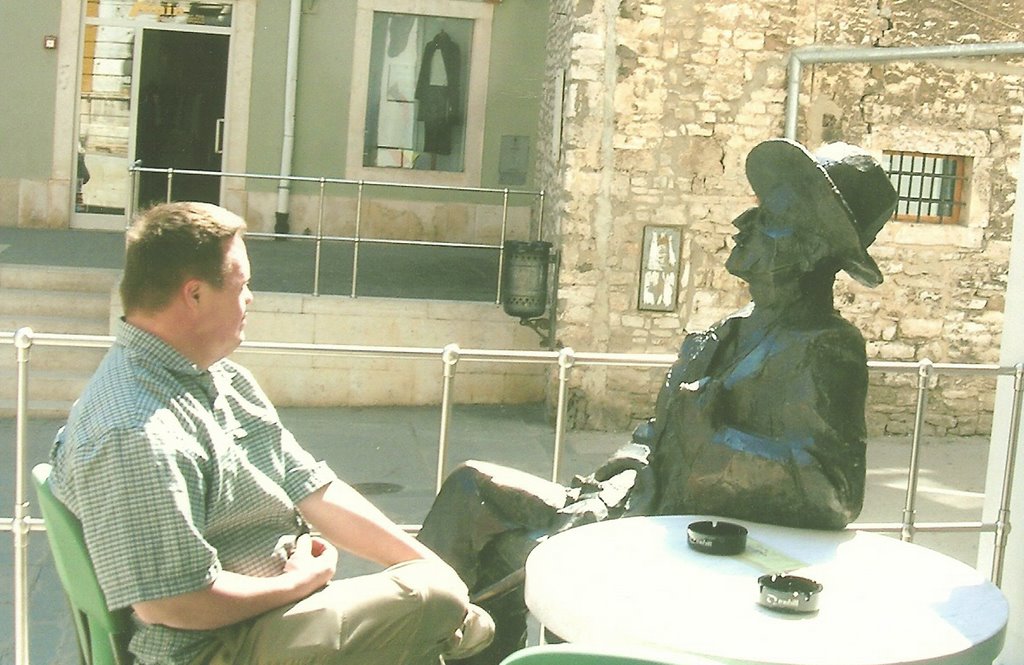
Follow signs for any real or fictional person. Or, you may just come upon one at a cafe. Here we found James Joyce, in Pula, Istria, Croatia - near the old Roman gate.

Spain. Ernest Hemingway was in Spain in the 1930's, among many other places. See www.timelesshemingway.com/thearoom/generalsec1. See the Hemingway post at
Spain Road Ways

France. Joan of Arc is over much of northern France. See www.archive.joan-of-arc.org; and
France Road Ways

Germany. The Brothers Grimm are centered in Germany. A fine museum is at Kassel. It was hard to find with our map, but we just parked finally, and walked through a large park rather than cope with one-way streets. The Brothers Grimm tales are the subject of www.nationalgeographic.com/grimm/index2. Our culture waters them down ridiculously. Are our children so fragile that they can't hear the real thing? I have an old Grimm from the late 1800's, early 1900's, and Rapunzel becomes "with child," the young man falls off the ladder and is blinded in the briars, she wanders int he wilderness and has twins, and ultimately they meet up again.

Rome. The Romans were over most of southern and central Europe. See www.bbc.co.uk/schools/romans/; and Germany Road Ways. They knew that it is one thing to conquer, another to administer afterwards, and they did both well - for centuries.

We also dogged these characters, real and fictional - using England as an example of all the springboards:

England. Robin Hood's legacy or compulsory sharing has spawned a New York City anti-poverty effort at www.robinhood.org/home/home.cfm. See character overview at www.boldoutlaw.com/.You can give your opinions at the Robin Hood Society at www.robinhood.ltd.uk/robinhood/index.

England. Find more about King Arthur at www.kingarthursknights.com/.

England. Charles Dickens? see www.helsinki.fi/kasv/nokol/dickens.

England. Chaucer - this site includes music at www.luminarium.org/medlit/chaucer.

England. Thomas a Becket. His life and murder at Canterbury Cathedral are described at www.eyewitnesstohistory.com/becket.

England. Peter Pan. Read the story version yourself at www.literature.org/authors/barrie-james-matthew/the-adventures-of-peter-pan/index.

Wales. And the castles regarding the Prince of Wales and Edward II in www.castlewales.com/caernarfon, and Wales Road Ways.

Scotland. There are Robert the Bruce, see www.magicdragon.com/Wallace/Bruce6. And
and William Wallace (Freedom!"); this site says it is getting at the truth: Wallace . The BBC also has a site: William Wallace overview

Nessie, see Loch Ness

and Rob Roy MacGregor in Scotland. See Rob Roy; Scotland Road Ways

Orkney, Ireland, Shakespeare. King Lot at Orkney. Early British Kingdoms

England and Scotland. Samuel Johnson at Dunvegan at Electric Scotland

The Huns, Huns. See the map of the migrations there. There are vestiges in Transylvania also. See Romania Road Ways

Everywhere. The Plague, www.themiddleages.net/plague.

Italy and France. Leonardo, www.mos.org/leonardo/bio.

England again. Dickens, www.online-literature.com/dickens/. Note to parents and teachers - educate yourself about what kind of term paper resource this is. I hadn't looked into them before. More traditional site is www.ontalink.com/literature/charlesdickens/index.

There will be plenty of signs for the other big sights as we go anywhere. We just don't focus on them. Sing whatever song you know about the place name or from the place as you go. Great for Paris and Ireland and Germany.

Brave people overcome: Marketgarden, Uskoks, Vinegar Hill, Templars, Heretics all over


Remember the overrun. Ours is a violent past. Look for this greed and power theme: Who lost out to history?

1. Operation Marketgarden, WWII in The Netherlands (A Bridge Too Far): Nijmegen and Arnhem. See www.rememberseptember44.com/. If the Allies had ultimately lost, what memorial would have lasted at these places for the people who died? History is told by the victors.

Is this true: Who gets in the books, and how, depends on the interest of the victor.

2. Croatia's Uskoks. Go to the city of Senj. See Croatia Road Ways That was an Uskok town, with their fortress at the top of the hill. I understand the Uskoks were refugees as the Turks pressed north and as the Ottoman Empire expanded on and on. The Uskoks settled at Senj and then assisted the Venetians and other Croatians against the Turks.

They were so successful, that the Turks were stopped, but then the Uskoks had to defend against their erstwhile allies, the Venetians, who turned against them, and ultimately demolished them. Greed and force.

3. Ireland and Vinegar Hill. See Ireland Road Ways Go up that hill, and feel how it was for farmboys with pitchforks to ascend against cannon. There is a statue in Wexford showing that. Vinegar Hill at least is remembered in folksong, however - remember Father Murphy. Next St. Patrick's Day. He was with the boys at Vinegar Hill, and was executed for it. Politics and force.

4. Here is a big one. The Knights Templar. Interest stems from seeing Templar castle, off on hill, inaccessible, Croatia. Misguided destruction; then the destruction of the destroyers. Tradition lives on. See the founding of the Knights Templar at users.1st.net/whitacre/templars. And at www.crystalinks.com/templars.

Find out for yourself what they did, what they learned and hid, if anything, and who did them in and why; and from as many sources as you can. Not just the movies or current novels.

Quotation attributed to St. Bernard of Clairvaux justifying Templar existence at the First Crusade by glorifying killing of non-Christians (in Berry, Steve, The Templar Legacy, Ballantine Books 2006 at p.353 (fiction):

"Neither dealing out death nor dying, when for Christ's sake, contains anything criminal but rather merits glorious reward. The soldier of Christ kills safely and dies the more sarely. Not without cause does he bear the sword. He is the instrument of God for the punishment of evildoers and for the defense of the just. When he kills evildoers it is not homicide,but malicide, and he is considered Christ's legal executioner."

Then the fate of the Templars themselves. Friday the 13th. Slaughter. Remnants? Great fun on internet.

Heretics. People who believed what they believed. See an overview of this concept of "heresy" at www2.kenyon.edu/Projects/Margin/heresy. Lions and tigers and bears? Ultimate issue seems to be the challenge to hierarchy. Gone.

Monday, July 31, 2006

Flags

Know the flag symbols and design before you go, and find out why they are as they are. There may be significant history there, and an excellent start for a conversation. Tell us about your flag.

There is a website on national flags, and how they came to be designed. See flags of the world at www.allstates-flag.com/. Click on the search menu at the top. Go to Serbia-Montenegro (Montenegro is now independent, however) and follow the clicks to its flag - a splendid double-headed gold eagle on a red ground.

Invasions: Crusades, Normans, Mongols, Magyars, Huns, Goths, Vandals, Ottomans, Turks, Persians, Invaders

Here is an excellent summary of the people invading other people: Crusades, Mongols, Khazars, the Rus, Ottomans, Turks, Persians, Mongols, almost you-name-it: at the History of Central Europe, at //mysite.du.edu/~etuttle/misc/europe.htm#Mong


Normans:
Here is the Cathedral at Palermo, in Sicily - Norman and Byzantine mix --and the area a crusader stop point.


Vikings:
The Vikings - Northmen- Normans - slid in their longboats rivers into Asia, Europe, Eastern Europe, Western Europe, and the oceans between, and had more of a culture than you may think. Here is a large website on the topic of Vikings, including Video. See www.pbs.org/wgbh/nova/vikings/; and for Viking ships: www.stemnet.nf.ca/CITE/vikingships.htm#Construction; and for their religious beliefs: www.pantheon.org/areas/mythology/europe/norse/articles.

They attacked Irish monasteries in about 900, maybe earlier, and the French in Paris (was this at the same time or earlier?) bought them off by giving them Normandy -thus, the Normans. The Vikings then bypassed Paris, and attacked all the way to Burgundy.

For any of these site addresses, use the basic dot-org, and the rest to navigate to where I think the best part is.


Thursday, July 27, 2006

Mysteries in photos

We always come home with some pictures we just can't put in a specific place.
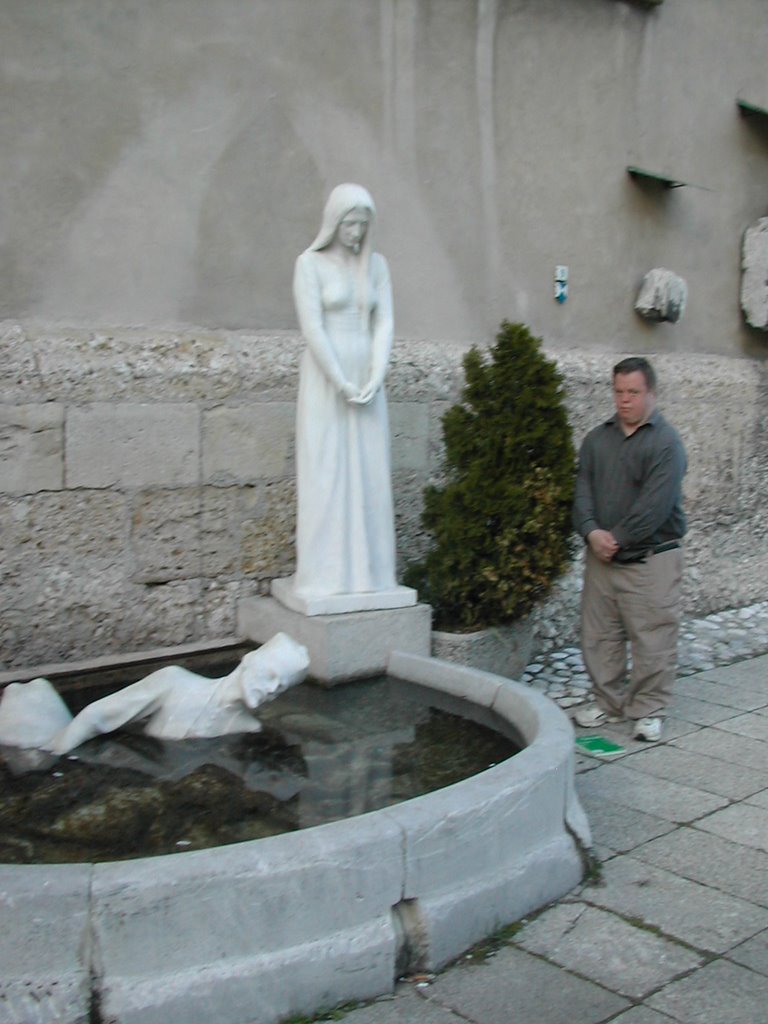
Who is this unfortunate cleric, being pulled under by some kind of serpent, while the tall statue lady watches and mourns. It is Croatia somewhere, but we cannot find the story.


Bishop Gregor of Nin, at the left, 10th Century, is not a mystery. He used the local language in Roman Catholic church services, and sharply disputed Rome's position not to do so. See experts.about.com/e/n/ni/Nin. The mystery - or maybe not - is why people like him fail us. The power of a hierarchy, whether religious or political or any aspect of society, takes on a life of its own, and can be overwhelming - and not at all in line, necessarily, with the "founders." Power does what power does.


.................................................................................................................................
These are waiting to be put elsewhere. Just like stuff on the stairs to the second floor.


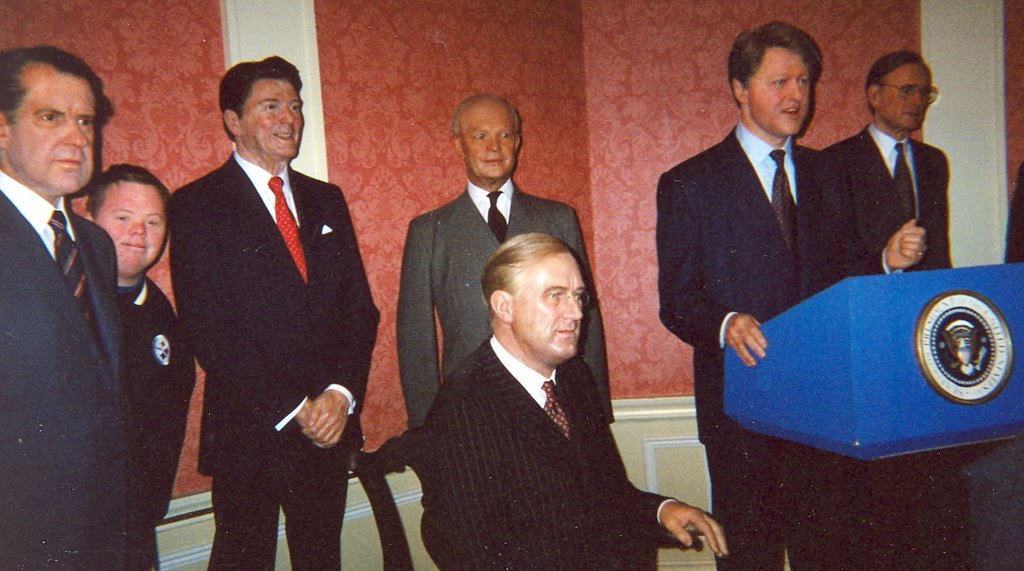
Presidents, Madame Tussaud's Wax Museum, London; and knights preparing for battle, Leeds Castle, England.


William Wallace, Stirling, Scotland.


Joan of Arc, France.


Guan Yu, China. He was a general, then became God of War. J's picture, his trip to China.
See Guan Yu

Castles

An overview of castles in Europe: go to www.3dphoto.net/world/topics/castles/castles.


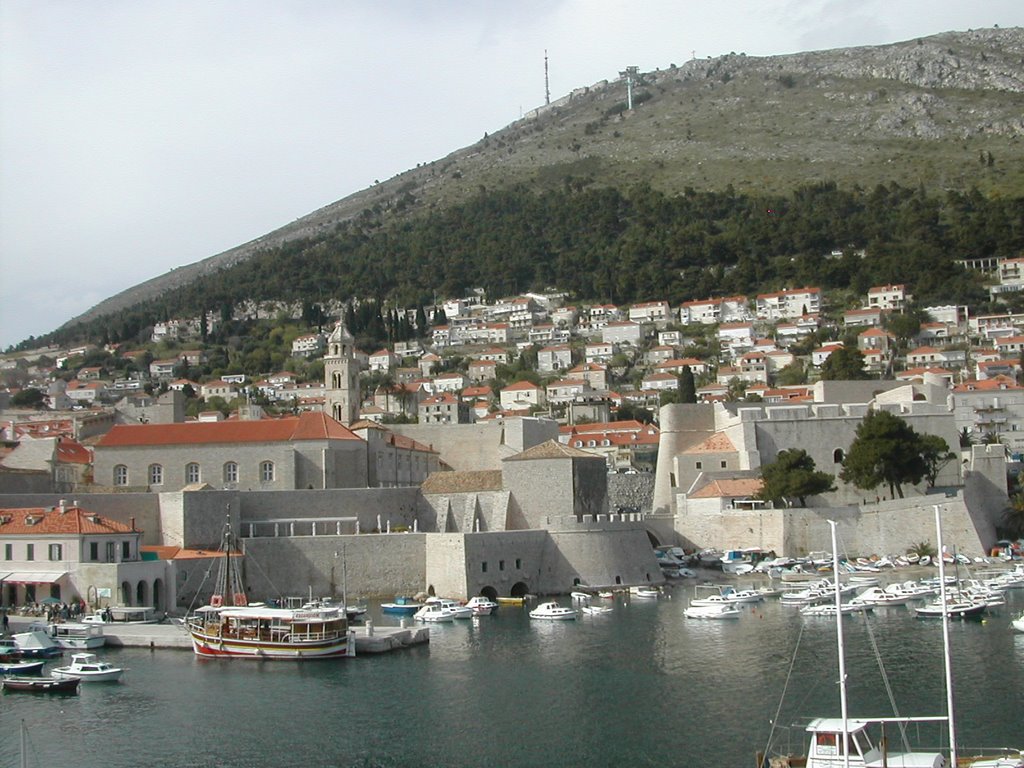
Dubrovnik, Croatia. Many, many walled towns on peninsulas and islands along coast here.

Mont St. Michel, France. This has a car causeway now.

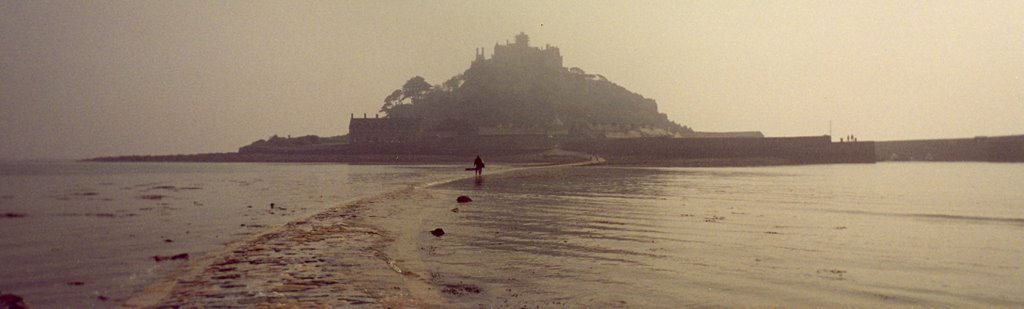
Mount St. Michael, near Cornwall, England. No causeway. Walk or boat out. Watch tides.

Bodiam Castle, England.

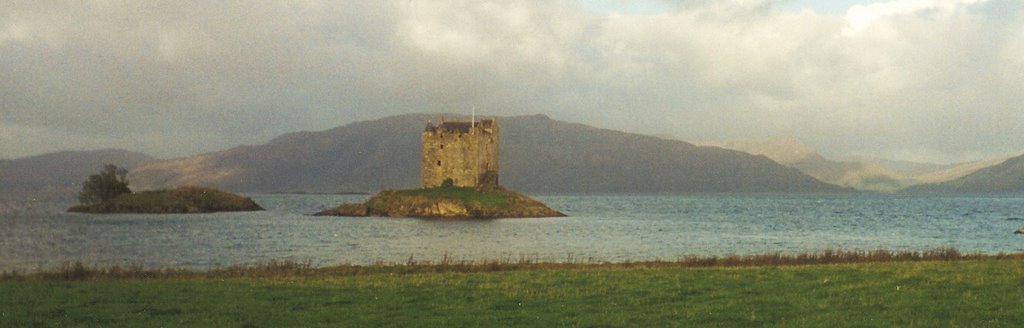
Castle Stalker, Scotland.

Wednesday, July 26, 2006

Following ethnic groups - Roma (Gypsies); Basques; Vlachs

Sibiu, Romania. I was uncomfortable taking pictures of Roma girls and women, or interrupting family groups, but they were easily seen, in doorways, with companions in the street, as couples, as families at the bus or anywhere. Brightly colored clothing, long full skirts, beautiful jewelry(for the well-to-do) -distinctive.

These men may not be Roma, but instead traveling merchants from an old tradition that may have begun in the age of the Templars - see Romania Road Ways.

We did see Roma in casual, traditional and formal dress, for some occasion. And families. Very visible.

There are wide misunderstandings about Roma customs, and their history has been extremely difficult, including (according to this site) 500 years of enslavement in Romania. See this government site on the Roma - use only the dot org if the rest is not helpful. Sometimes the sites are so big that you may want assurance that you got to the right place. See www.media-diversity.org/articles_publications/A%20Problem%20Brewing%20Media%20Coverage%20of%20Roma%20in%20Romania. Roma were also subject to the mass exterminations of the holocaust. See, e.g., www.romnews.com/4_6. on the genocide issue. Roma survived and are a growing population, and remain all over Europe. In Slovenia as other places, however, the tensions remain. See Slovenia Road Ways There, the family was forced out, and has not been allowed to return.+

Roma history overall: See www.geocities.com/~patrin/timeline.

Basques: apparently, the cheek samples for DNA link this Spanish group to Celts. And, the Basques were great navigators. See Spain Road Ways. The cheek DNA testing is fascinating - I just saw an account on the History Channel, I think it was, that found a match between a young girl in the mountains of Mongolia, with reddish hair and fair skin, and a burial site of a culture of warrior women in, I believe it was, Macedonia. DNA followed the migration of the group to Mongolia. Even the patterns on the yurt, and clothing and walls in Mongolia were close to those on fabrics in the burial site.

The Vlachs are an ancient sheep-herding, nomadic people found in Romania and Greece, and probably elsewhere. See Greece Road Ways; and Romania Road Ways.

Celebrating


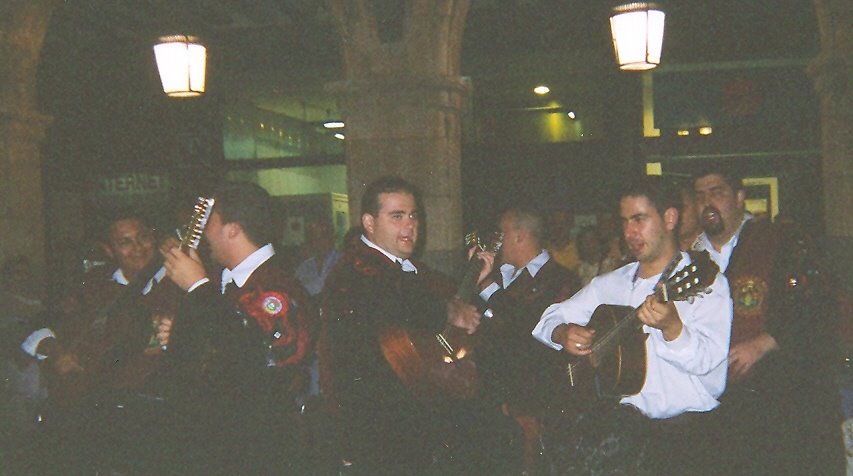
At Salamanca, Spain. A little night music.


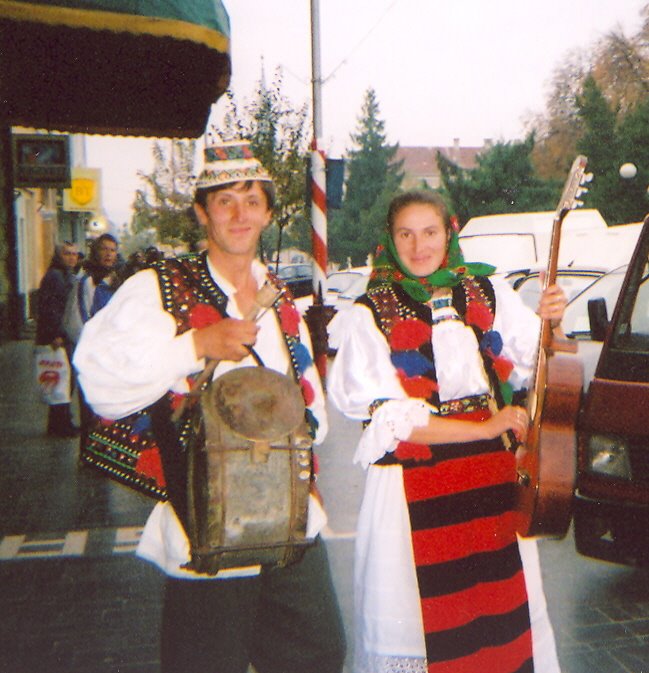
At Sighetu Marmetij, Romania. Folk singers at a banquet for town officials in the big old hotel. There also were dancers. This was the Festival of the Cows, when the herds are brought down in the autumn from the higher pastures.


More night music, at Bucharest, Romania. We did buy their CD.


And at a banquet at Karlovac, Croatia- we were in a side booth, and suddenly music and a large group of people all appeared. Loved it. Much dancing. Also, American music along with the Croatian.

People's religions


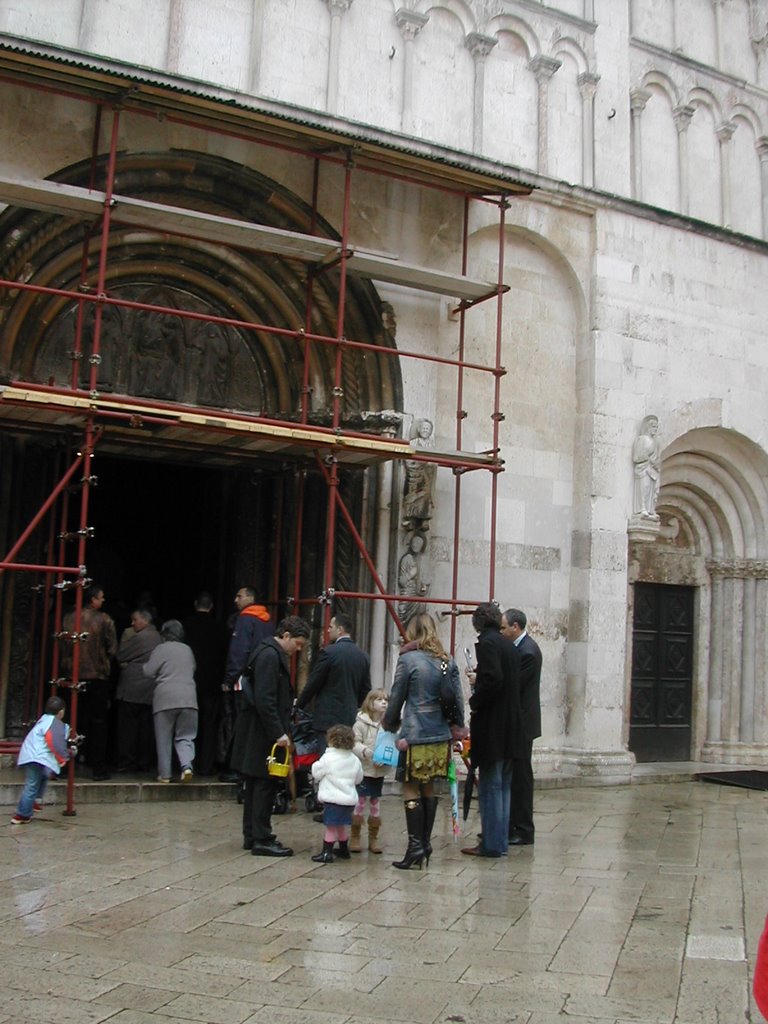
Easter morning, Cathedral, Zadar, Croatia. Second largest city after Zagreb. Cosmopolitan. Renovations going on.


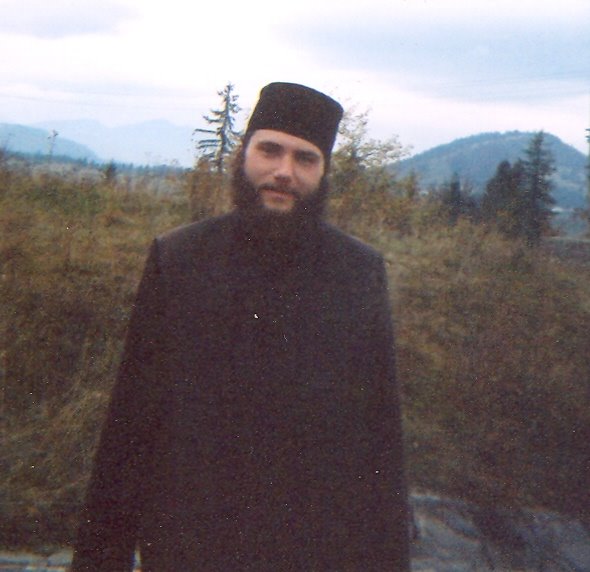
Father Stefan. You met him earlier, at the post on beards. We gave him a ride (he was hitchhiking) at Bistrita, Romania, and left him at Piatra Fantenele. He was headed for Vatra Dornei. Much talk along the way. Usually possible to cobble together what each wants to say. English is known well enough by many people, so you can get into discussions.


Horezu, Croatia, at left. Again, Orthodox Christian.


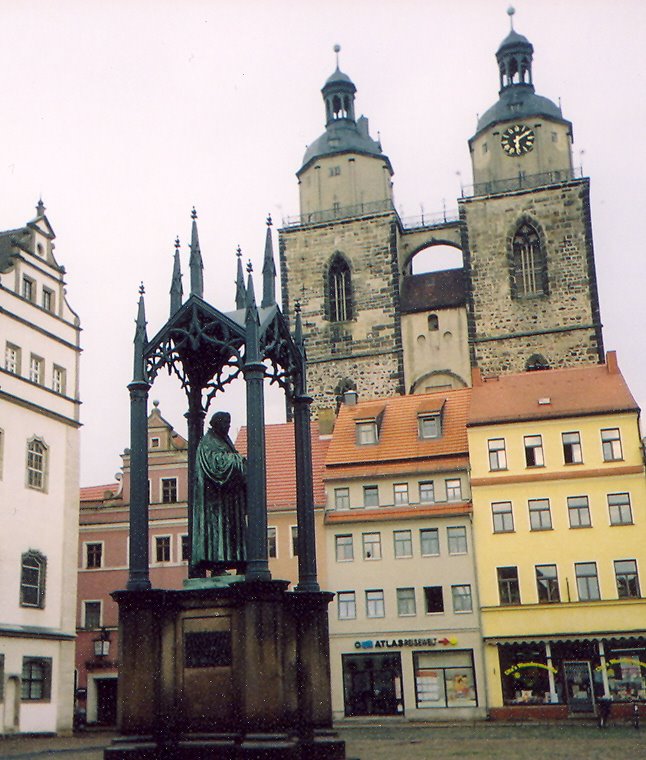
And Wittenburg, Germany, with Martin Luther.

Montenegro: the islands off the town of Perast, Our Lady (manmade, from 550 years of dropping rocks on an underwater ledge, and sinking captured ships and making the island) and St. George's, with the Benedictine monastery.


Schlosskirche, Martin Luther, Wittenberg, Germany, left.


Church, abandoned, near Bogomil graves, road from Sinj, Croatia, to Mostar, Bosnia, at left.


Pilgrimage site, Medjugorje, Bosnia.

Spring, spirits, beseaching ribbons, Ireland, at left.


Glendalough, Ireland.

Teaching by painting the stories. Croatia painted monasteries. Orthodox.